
Hilaree Nelson
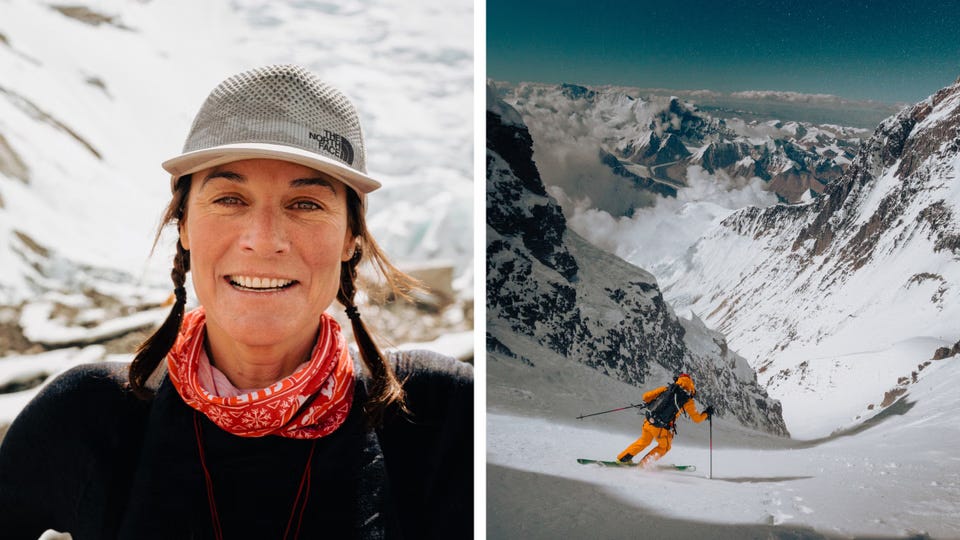
Hilaree Nelson, adventurer, record-holding skier and mountain climber, died on September 26th, 2022. She was 49.

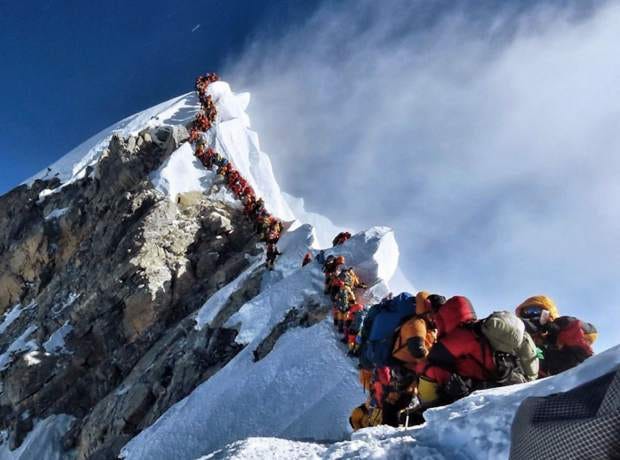
Her head slumped against the frigid Himalayan wind blowing off the face of Everest. Hilaree Nelson took a breath and surveyed the scene in front of her. After weeks of planning and executing her first ascent of Everest, she could finally see the peak.
She came to the Himalayas in search of renewal. What she saw on that jagged peak disturbed and frustrated her beyond anything she had experienced in her life: a neat queue of hundreds of climbers atop the well-trod, prescribed path to the world’s tallest peak. It was appalling that one of the most beautiful places in the world had effectively been turned into a tourist attraction.
Seven people had died in the week leading up to their time to summit; the tragedy of those deaths was that they were simply caught exposed in the wrong place in line at the wrong time. The sheer volume of climbers and the macabre waiting line it produced had cost seven people their lives, and yet here the line moved happily along, granting each person a few moments on the peak for a picture and a high five before making space for the next climber.
The experience of climbing the world’s tallest peak had been reduced to a commercialized, pre-packaged, high-stakes game of waiting in line.
This is wrong, she thought to herself. She looked at her climbing partner. His blank gaze revealed his own thinking: What are we doing here?
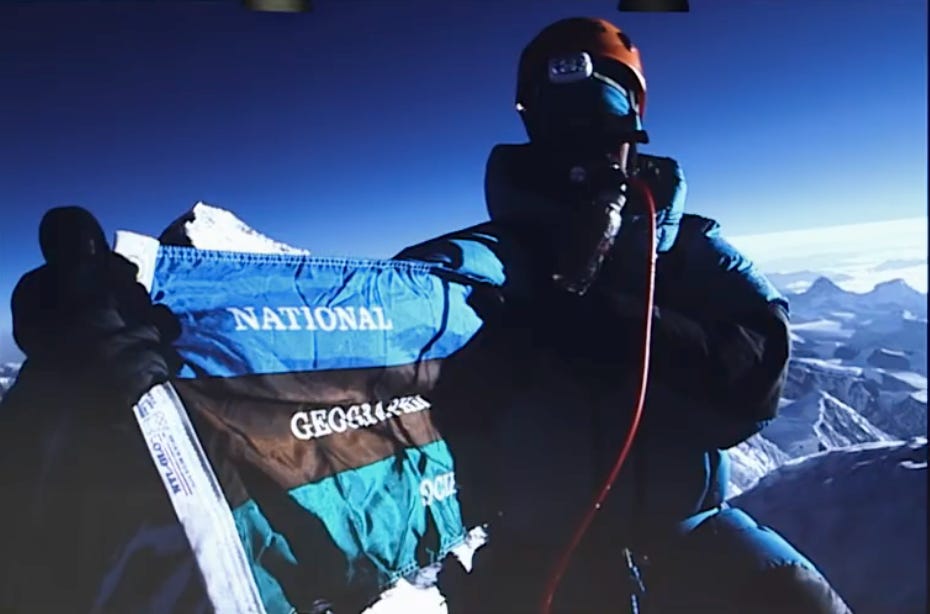
Hilaree Nelson built her life around summiting the peaks and skiing the faces of some of the world’s most intimidating mountains. She had been excited to add her name to the list of women who had conquered Everest. It was her first sponsored expedition working with National Geographic, and the trip was the first major venture she had taken since the tragic death of a heli-skiing client a few months prior.
She was seeking rebirth and a renewed relationship with Mother Nature. A lifetime of trust and love of Nature had been shattered when she watched her client tragically drown crossing a stream near her home in Telluride, Colorado. She jumped at the opportunity to climb Everest as she sought absolution. “If I could just stretch my soul through enough suffering,” she recalled later, “maybe I’d finally find the space to forgive myself and mend my relationship with Mother Nature.”
But here she was, about to summit Everest. That hollow spot in her chest remained.
She and her climbing partner discussed their next move: they would keep going.
Less than 24 hours later, Hilaree and her partner stood on the summit of Lhotse, a lesser-known peak near the summit of Everest. Up on Lhotse they were alone, far from the pre-packaged hellscape they left on Everest. Exhausted, she drank in the dancing mountain tops, reveling in a sense of true accomplishment. In her fragile state she hadn’t realized the gravity of what she’d just accomplished: she had just become the first woman to summit both Everest and Lhotse in a 24-hour period.
In her brokenness, she also spoke with Mother Nature once again. She forgave and was forgiven. That thing she had been seeking also took on an unexpected form: gratitude. Gratitude for seeing the curvature of the earth bend against the horizon. Gratitude for the two beautiful boys she had left behind. Gratitude for life itself.
That gratitude would define her as an adventurer, and that trip impacted what she would advocate for throughout the rest of her life: respect for Mother Nature, and encouragement for others to explore and test themselves among her gifts.
There were many titles that came and went throughout Hilaree Nelson’s life. Mother. She was a loving mother to two boys, balancing the demands and pressures of motherhood with her travels and career. Record Holder. In addition to her Everest/Lhotse climb, she was the first woman to descend on skis from many of the world’s most intimidating peaks. She is widely regarded as the most prolific mountaineer of her generation, culminating in her being named Captain of the North Face’s Athlete Team, a title given only once before.
Other accolades came and went, but one thing she defied being called was a “thrill seeker.” No, adventurer was more accurate. There was a thrill in summiting mountains, of course. She never hid from the fact that she relished that feeling of accomplishment. But adventuring to her was about transcending the limits of human exertion to reach out and touch something holy.
Her instruments happened to be an ice axe and skis, but her aims were far more lofty. Despite the limits she pushed herself toward, her goal wasn’t to turn people into feckless risk takers. Hilaree often spoke publicly about her aim to help people properly align their relationship with risk, to encourage a focus on being present, and to empower others to guard and appreciate the gifts of Nature.
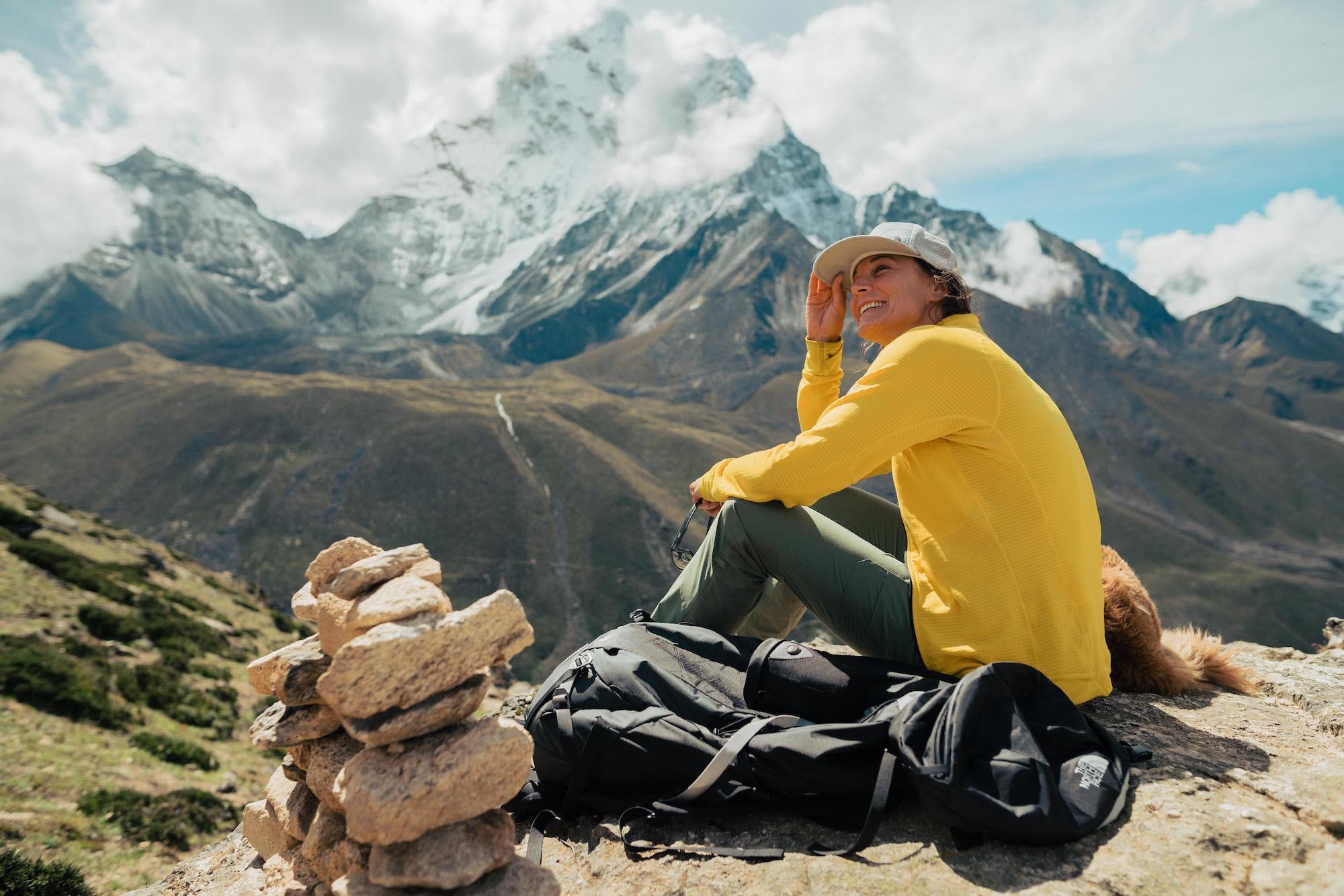
Her love for the outdoors began as a child. Island hopping on the family Chris-Craft through Canada’s Northwest Passage with only whatever supplies her father brought with them, she learned to love the simplicity and perspective of life outdoors. She loved watching a day’s activity revolve around food, water, and shelter, everything superficial whittled away. She experienced the joy of being truly present with her family. She trusted Nature to provide, and “associated God with Mother Nature.” They were one and the same, and her experiences on those islands gave her a trust for the natural world and its gifts.
College brought her to the Colorado College of Mines. During her first week of school she fell in with a group of misfit skiers, mountaineers, and others who fueled her interest in the outdoors. She was a serious student and graduated with a degree in Biology, but joked with her parents that she was dedicating more and more time to her second major: Skiing.
After graduating, she booked a one-way ticket to Chamonix, France with a commitment to build her technical skills and exposure in a new environment. Her intention was to stay for a ski season. That season became a second, then grew to a 6-year odyssey. There were two lessons she took from Chamonix: first, that her passion could actually become a career. The North Face was the first brand to reach out, interested in having her lead ski expeditions in India and other far-flung corners of the world. It was her first exposure to the pressures and expectations of skiing as a professional, but she reveled in the chance to continue to develop herself while being able to support her life. Passion gave way to true obsession.
The second lesson was more sobering. The beauty of her surroundings and the thrill of pushing limits did not change the truth: one person per day died throughout the year in that valley during her tenure. There was a recklessness to the culture in Chamonix that shrugged off these deaths; she left France feeling herself lose the humanity and scar tissue that came from losing friends.
There had to be another way. One could enjoy the outdoors and all her gifts, push themselves beyond pre-set limits, and still maintain a healthy respect for the dangers at play. She returned to the US in search of that balance, not wanting to lose the sense of control and pride she had in her skills.
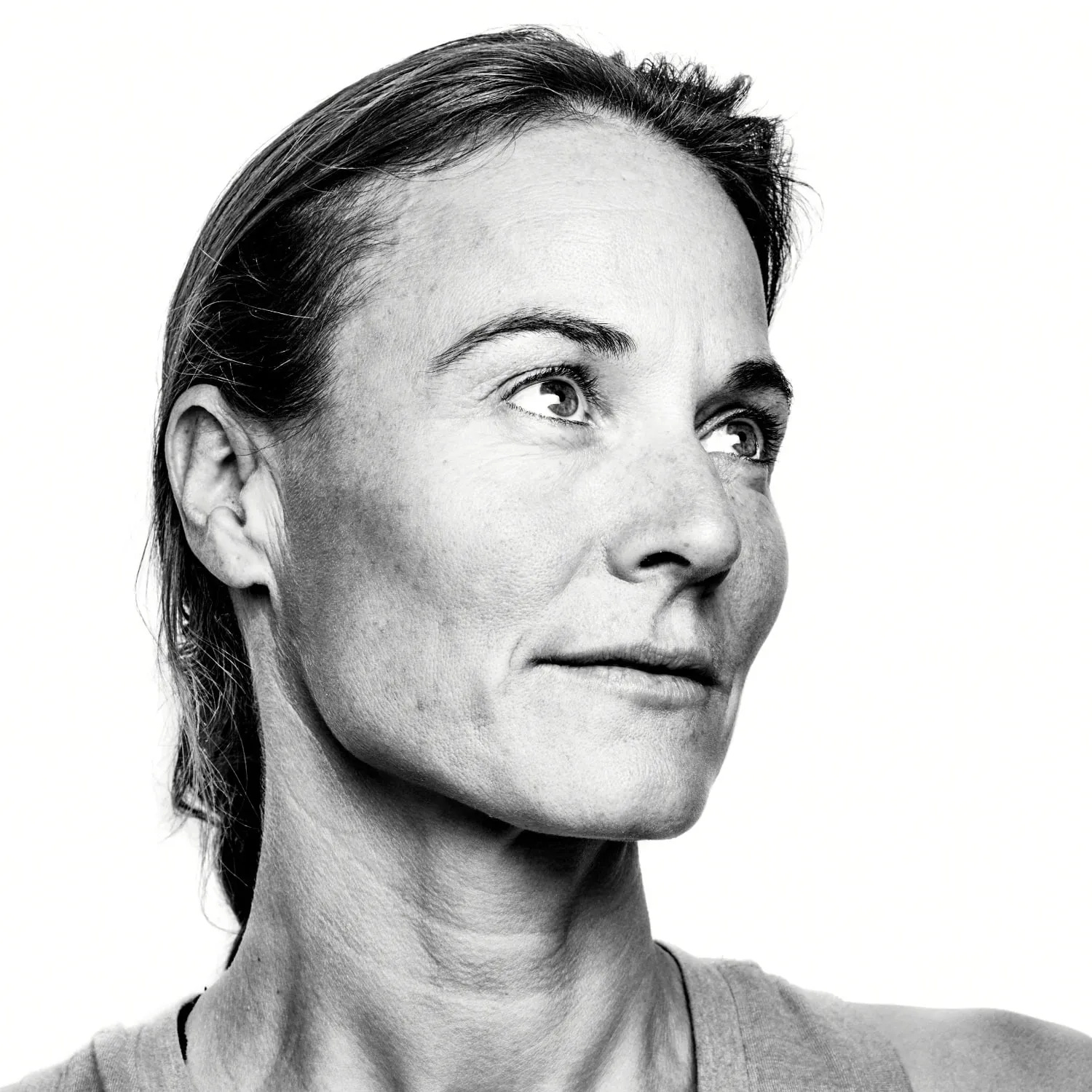
Balance and structure came in forms. She returned to Telluride, married, and became a mother to two boys. She had steady work as a ski guide and was pouring herself into her community.
Challenges came and went throughout her career. In addition to the death of her skiing client in Telluride, there was a failed National Geographic expedition to Hkakabo Razi in northern Myanmar. She and her husband divorced. Professionally she stood on many pedestals and was subsequently knocked off them. She suffered the same pressures and expectations of many high-performing athletes: by being built into something that didn’t exist, the world was all too eager to watch her inevitably fall.
But through it all, she maintained the appreciation she gained on the peak of Lhotse. And rather than simply climbing to fuel her own passion, she embraced the role of Ambassador for Mother Nature with a simple message: Get outside. Don’t give in to a life that emphasizes security and predictability. Experience self-reliance and suffering. Embrace the freedom that comes with connection to the natural world.
Blessed with the outsized perspective of her travels, she was unafraid of criticizing the West and its largesse. Close contact with real poverty across the world left her frustrated when she re-integrated to life in Colorado. “Happiness” in the purely American definition was shallow and unfulfilling in her eyes. And she was especially critical of what she saw as short-sighted practices of unlimited extraction and exploitation of the natural world. She wanted her kids to see their mother continually test herself professionally as well as embrace the responsibilities that her platform gave her.

Hilaree Nelson died on September 26th, 2022. During a ski descent with her partner from Manaslu, the world’s 8th-highest peak, she was caught in an avalanche. Her body was found days later, and she was cremated in a small ceremony in a mountain temple.
She had more mountains to climb in her profession and in her personal life; her children were young and she had found love again. But Hilaree dedicated her life to inspiring others to live beyond the grips of a more subtle, insidious kind of tragedy.
Hilaree loved quotes. She riddled her notebooks with them and had sticky notes placed throughout her home. One of her favorites from Civil Rights leader Dr. Benjamin E. Mays was scrawled in her notebook.
The tragedy of life is often not in our failure, but rather in our complacency; not in our doing too much, but rather in our doing too little; not in our living above our ability, but rather in our living below our capacities.
Glorious.
Another good one, Andrew.